


Arugula
~2,400 mg
Swiss Chard
~1,000 mg
Spinach
~800 mg
Beetroot
~500 mg
Lettuce
~300 mg
Celery
~250 mg

If you have ever heard about the performance or cardiovascular benefits of beets, you have already brushed up against the science of dietary nitrate sources. Nitrates are naturally occurring compounds...
If you have ever heard about the performance or cardiovascular benefits of beets, you have already brushed up against the science of dietary nitrate sources. Nitrates are naturally occurring compounds found in vegetables, soil, and water. When consumed, your body converts them into nitric oxide, a molecule that supports blood vessel function, oxygen delivery, and athletic endurance.
This guide covers the best natural nitrate sources, which foods are highest in nitrates, how food compares to supplements, and practical steps to get more nitrates into your daily diet. Whether you are an athlete, a health-conscious eater, or simply curious, this is what you need to know.
Dietary nitrates are inorganic compounds with the chemical formula NO3. They occur naturally in soil and water, and plants absorb them during growth. When you eat nitrate-rich vegetables, oral bacteria convert nitrate (NO3) into nitrite (NO2). Your body then converts it into nitric oxide (NO), the active compound.
Nitric oxide acts as a vasodilator. It relaxes blood vessels, improves circulation, and supports oxygen delivery during physical activity.
Nitrate
Absorbed from nitrate-rich vegetables you eat
Nitrite
Converted by oral bacteria in your saliva
Nitric Oxide
Active vasodilator. Widens blood vessels and improves oxygen delivery

The most reliable natural nitrate sources are vegetables. Nitrate levels vary based on plant type, soil quality, growing conditions, and season. Below are top whole foods ranked by nitrate content per 100g of fresh weight, based on data from the European Food Safety Authority and peer-reviewed nutrition databases.
~650–1,800 mg per 100g
One of the highest nitrate-rich vegetables. Raw spinach retains more nitrate than cooked forms.
~250–4,800 mg per 100g
Highly variable but often the richest leafy green source of nitrates.
~250–1,000 mg per 100g
Widely studied for its role in nitric oxide production, especially for exercise performance and blood pressure support.
~200–500 mg per 100g
Easy to include in daily meals. Loose-leaf varieties often contain higher nitrate levels.
~200–400 mg per 100g
A practical snack option with a steady nitrate profile.
~150–350 mg per 100g
Often overlooked. Both the root and leafy tops contribute to nitrate intake.
Average mg per 100g of fresh weight (approximate midpoint values)
Other natural nitrate sources to include are radish, cress, watercress, and Chinese cabbage. Rotating these adds variety and boosts overall nutrient intake.
If you’re wondering what foods are high in nitrates, here’s a quick list of the most effective options:
Best Sources of Nitrates:
Leafy greens and beetroot are the top sources due to their naturally high nitrate content and excellent bioavailability.

Both routes deliver dietary nitrate, but they work differently in practice. Understanding the tradeoffs helps you make the right choice for your goals.
| Factor | Whole Foods | Nitrate Supplements |
|---|---|---|
| Nitrate Content | Variable by crop and season | Standardized per serving |
| Additional Nutrients | Fibre, vitamins, antioxidants, polyphenols | Minimal, nitrate-focused |
| Convenience | Requires prep and storage | Ready to use, portable |
| Dosage Precision | Difficult to know the exact intake | Known and consistent |
| Best For | Long-term health, everyday diet | Pre-competition, training protocols |
| Cost Over Time | Low to moderate | Moderate to high per use |
To get an effective amount of dietary nitrate from food alone, you would need to eat very large portions of vegetables like spinach, beetroot, or arugula.
For convenience and consistent intake, supplements such as Beet It Sport Nitrate 400 provide a standardized dose without having to consume excessive food.
Getting 300–500 mg of dietary nitrate from food alone daily requires either a large portion of arugula or 200g of raw beetroot. For most, this is challenging on busy days, during travel, or when vegetable access is limited.
Eating nitrate-rich vegetables every day is hard to maintain. Variations in crop, season, cooking, and storage affect nitrate levels, making consistent intake difficult.
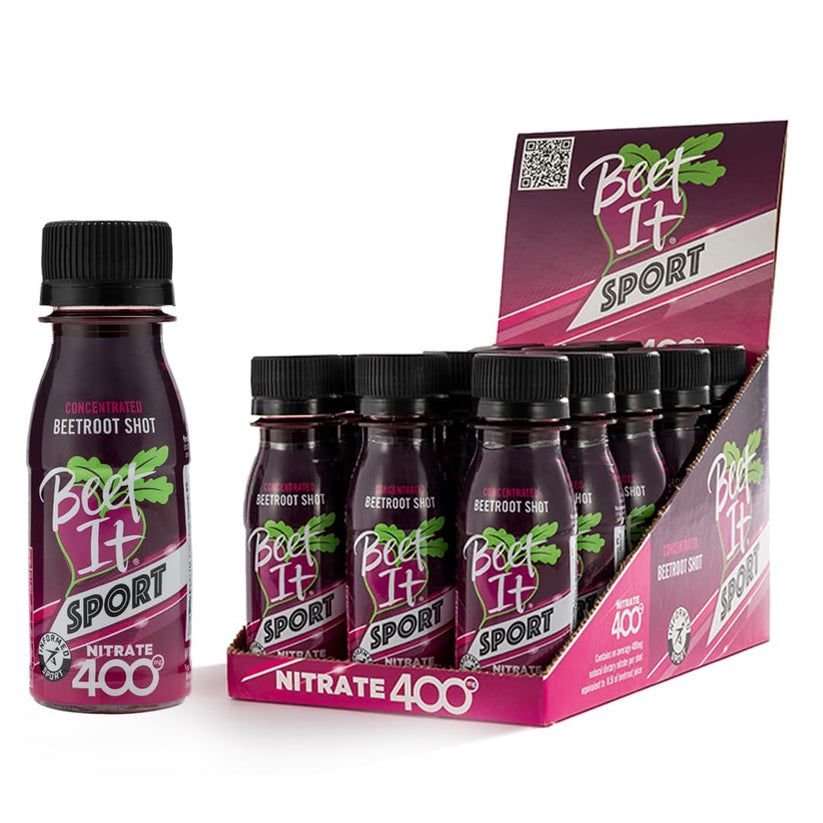
Each 70ml shot delivers 400mg of natural dietary nitrate standardized from concentrated beet juice. Ideal for runners, cyclists, and team sport athletes who need precise nitrate intake.
Athletes and active individuals looking for a reliable, consistent nitrate dose often turn to concentrated beetroot-based supplements.
To improve nitric oxide levels, focus on simple daily habits.
A balanced approach works best:
This approach helps you consistently access the best natural sources of nitric oxide.
Foods high in nitrates include leafy greens and root vegetables.
Top examples:
For a more complete list of nitrate-rich foods, check out foods high in nitrates.
Dietary nitrate sources are essential for natural nitric oxide production. Vegetables like spinach, arugula, and beetroot provide nutrients that support long-term health and performance.
For many, achieving consistent nitrate intake through food alone can be challenging. Supplements offer a practical and reliable way to maintain steady nitrate levels, especially for those with active lifestyles.
Combining nitrate rich foods with supplements ensures both performance benefits and overall health. This balanced approach makes it easier to support nitric oxide naturally and effectively.
Our expert team can take care of it. Just click Get Expert Install and we'll send you an email when it's ready!
If everything looks okay to you, you can Ignore this warning.